
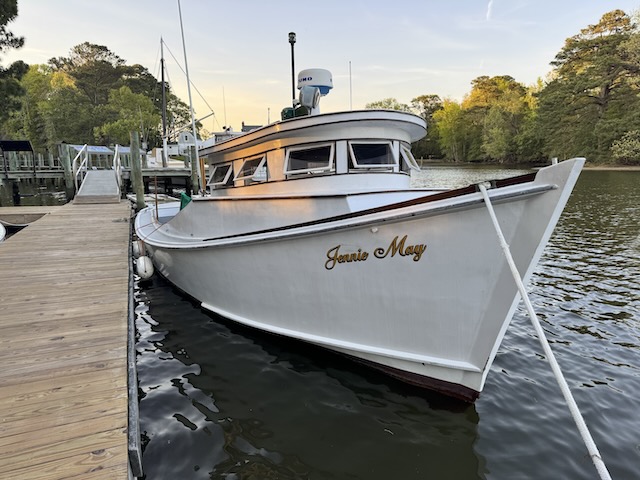
Chesapeake Bay is one of America’s most storied cruising grounds for sailors (blow boaters) and motorboaters (stink potters). It’s full of possibilities for gunkholing, plus a number of key towns and noteworthy destinations along the way.
This list is to help inspire your next adventure on Chesapeake Bay, whether it’s this fall on your way south to The Bahamas or next spring on your way north to Maine or Nova Scotia.
The Chesapeake Bay Loop Route

The Chesapeake Bay is a huge estuary — the largest in the country, as a matter of fact. It’s fed by several huge rivers (Potomac, Rappahannock, and Susquahanna) plus countless smaller creeks. It’s all those waterways that make it such an attractive cruising ground.
But the geography of the Bay does lead to one inconvenience when traveling up and down its length — everything is a long way off the main north-to-south route in the middle. If you want to make miles, you can just stay in the middle and keep on going. But if you want to stop to see the sights, or need to get protection from the weather, you’re oven two or three hours from a safe harbor because you have to meander your way around shoals and up winding creeks.
If you are out to see the sights, there are two ways you might go about it. One way is to just hop back and forth between the Western and Eastern Shores, depending on what your schedule and the weather allow.
But another option is to plan a Loop route, a circuit of the Bay. You could start and end anywhere you like, and you could go clockwise or counterclockwise. But the point is, you can hit up all or most of the must-see spots as you slowly meander your way up and down all the beautiful creeks.
Chesapeake Bay Boating Destinations — Western Shore
When cruising the Bay, the mainland side of the Bay is known as the Western Shore. On our Loop Route, we’re going to begin traveling north from the bottom of the Bay at Norfolk, Virginia, and follow the shoreline up to Baltimore.
Remember to plan your weather carefully when trekking up and down the Bay, particularly in the area of the Potomac River, which can kick up a really nasty chop. It’s always worse than we expect it to be there. Tides should be planned for, as well, especially in the Lower Bay. It’s less than a knot of current but makes a big difference for the passages on slow boats. For more tips and tricks about your Bay cruise, be sure to check out our Boaters’ Guide to Chesapeake Bay.
Keep in mind, this isn’t a complete list. For the most part, the ports we’ve included here are cruiser favorite destinations and towns. There are a ton more spots that are just beautiful, scenic anchorages where you’ll be surrounded by nothing but ospreys and jumping fish.
Norfolk and Portsmouth, VA

Norfolk and Portsmouth lie across the Elizabeth River from one another, approximately 8 miles south of Hampton Roads, the large natural harbor at the base of Chesapeake Bay. There’s a large anchorage on the Portsmouth side at Hospital Point that serves as Mile Marker 0 from the Atlantic Intracoastal Waterway — so this spot sees its share of cruising boat traffic. It’s also a cruise stop, the world’s largest naval base, and a booming commercial port with tons of barge and tug traffic going on at all hours.
Both sides are great for exploring. Nautilus, a maritime museum and home to the battleship USS Wisconsin, takes up a large part of the Norfolk waterfront. Waterside Marina, with shops and restaurants, takes up the rest.
Portsmouth is home to the Coast Guard’s main operations center and is slightly more subdued. But both towns have tons of dining options in walking distance. Portsmouth has free dockage in the basin at the end of High Street — but use caution for the ferries as you come and go.
Hampton, VA

Hampton is directly on Hampton Roads at the confluence of the James and Elizabeth Rivers and the Bay. There are three ways to access it by boat: up the Hampton River to downtown, from Fort Monroe and Pheobus, or from Salt Pond. All are slightly different experiences.
Downtown offers several marinas and a small anchorage. It’s a walkable town with lots of restaurants.
Fort Monroe has one marina and an anchorage, and the community here is built on an old Army base and Civil War-era fort. It’s a fascinating place to walk around, and there’s a coffee shop, seafood restaurant at the marina, and some really nice beachs all within an easy walk.
Salt Ponds is a marina canal that opens directly to Chesapeake Bay about 3 miles north of Hampton Roads. It’s a good place to stop if you want a dock for a week or a month. There’s a large liveaboard community here, and you can get deliveries and ride shares. Nothing is within walking distance from here, however.
Yorktown, VA
Heading up the York River brings you to Yorktown, site of the famous Revolutionary War battle. Monuments abound, and the small waterfront area at the base of the bridge here has restaurants and shops. There a marina with slips and moorings. If you want to explore the other towns of the historic triangle (Yorktown, Williamsburg, and Jamestown), this is a good place to rent a car and check it out.
Deltaville, VA

Deltaville is a very small town that’s conveniently located for boaters transiting the Bay. It’s said that there are more boats than people in Deltaville, which is true because most boats here belong to weekend “come heres” who drive from Richmond.
There are several marinas on both sides of the tiny peninsula, plus more boatyards than you can count if you need work done. As the town goes, it’s spread out and not particularly cruiser-friendly. Thankfully, most marinas have loaner cars or bikes to get you to the market and back. The market isn’t much to write about, but there are two or three notable restaurants and a really nice marine consignment shop (Nauti Nell’s).
There are two good anchorages in Deltaville: one in Jackson Creek and one in Fishing Bay. Fishing Bay is wide open, but unprotected from the south. Jackson Creek has two branches and protection from all directions, but it’s tricky to enter. Thankfully, there’s an accurate survey on Aquampa (from the US Army Corps of Engineers) that makes the entrance and piece of cake. Still, we see folks run aground here every single time we stop by.
If you’re staying on Jackson Creek, it’s a quick walk over to the Deltaville Maritime Museum and its pretty grounds. It’s worth a walk around, and they even have a piece of the meteor that formed ChesBay many years ago.
Urbanna, VA

If you head up the Rappahannock River about 12 miles, you’ll come to one of the colony’s original tobacco ports, Urbanna, Virginia. It’s a charming little town with a pretty main street, and wonderful history museum, and some mighty tasty restaurants.
You can anchor in the protected harbor here or tie up at one of the two marinas. The grocery store is nicer than Deltaville’s, but still a bit limited and expensive.
Potomac River sidetrip to Washington, DC

The nation’s capital lies about 90 miles up the Potomac River, not a trivial sidetrip for a slow boat. But, if you’ve never spent time in DC and want to enjoy easy public transit, world-class shopping and dining, and wandering free museums until your feet and eyes hurt, it’s a really fun vacation from the boondocking that is normal on ChesBay.
It’s possible to anchor in DC, but the allowed area is limited. It’s easier to take a mooring or a slip at one of the marinas along National Channel, right under the towering Washington Monument.
Solomons Island, MD

Solomons lies on the Patuxent River just north of the Potomac. It’s home to a large naval air station, but also to a great number of boat yards, marinas, and boater services. It’s a nice base to stop and explore, and it’s a big enough place that you can get groceries delivered (and pretty much anything else you need). There are a few waterfront restaurants, including a popular cruiser tiki bar.
Solomons is also home to the Calvert Maritime Museum, my personal favorite of the Bay’s museums. In addition to classic and historic bay boats, the museum has a neat fossil collection and is home to a screwpile lighthouse that’s open for tours.
Annapolis and Edgewater, MD

Annapolis is the self-described sailing capital of America (just don’t tell Newport). It’s a busy spot with a lot going on, but the walkable capital of Maryland is a fun stop with lots to see and do. It’s also one of those towns that has plenty of water access and places to land your dinghy, with a dinghy dock on practically every street. Nothing makes a cruiser feel more welcome than easy access like that!
Baltimore, MD (Inner Harbor)
If you’re hankering for big-city vibes, Baltimore is your best bet. The Inner Harbor has several welcoming marinas that put you right in the best part of town, steps from any sort of diversion you might like to see. Food, museums, footpaths, clubs, cafes … you name it, you’ll find it here.
Havre de Grace, MD
Havre de Grace is a small town on the Susquehanna River at the head of Chesapeake Bay. You can anchor or take a slip at one of the marinas. It’s got a cute main street area with shopping and dining, and a welcoming vibe.
Chesapeake Bay Destinations — Eastern Shore
Now that we’ve reached the top of the Bay, it’s time to head back down south — but this time, let’s hit up all the spots on the Eastern Shore. In other words, we’re going to stick to the Delmarva Peninsula side.
Chestertown, MD
A few miles up the Chester River is Chestertown, an old port town and college town that oozes charm. It’s all right on the riverfront and easily walkable.
Rock Hall, MD
Rock Hall is conveniently located right on the Bay, just north of the Chesapeake Bay Bridge, which connects Annapolis to the Eastern Shore. It’s a pretty community made up of several large marinas and boatyards, and it serves as a homeport for many a local boater.
St. Michaels, MD

Heading a few miles up the Miles River brings you to what most cruisers will say is their favorite ChesBay stop: St. Michaels. It’s the idyllic little harbor town that has been discovered by the masses, so expect crowds and a more touristy vibe than other places. But it’s a beautiful town that handles it well. It’s also home to the Chesapeake Bay Maritime Museum, a spot all boaters should check out.
You can also get to St. Michaels via the Back Door — anchoring in the quiet residential creeks on San Domingo Creek off of the Choptank River south of town. There’s a city park where you can leave your dinghy, and it’s a quick walk into town.
Oxford and Cambridge, MD
Both of these towns lie up the Choptank River and offer a little side trip worth exploring. Of the two, Cambridge is larger with more restaurants and shops, while Oxford is smaller and more boating-centric.
Crisfield, MD
I was last in Crisfield about five years ago, and the place didn’t have a good vibe — I wouldn’t personally go back. But some cruisers love it, and it is the site of a few festivals and events you might want to see. You can anchor or take a slip, and the famous Smith Island cakes are sold at the bakery here.
Smith Island, MD, and Tangier Island, VA
These two islands sit right in the middle of the Bay, straddling the Maryland/Virginia border. They are far more isolated than you might imagine, so much so that Tangier Islanders have their own unique dialect (brogue) with origins from the original English settlers. For the most part, these are working fishing and crabbing villages with just a sprinkling of tourism. Ferries bring visitors to both, and there are some facilities for visiting boaters to explore.
Their remoteness and uniqueness make them noteworthy, but due to the challenges in visiting (shoaling channels, unreliable docking situations), more cruisers pass them up.
Onancock, VA

Onancock is a small town about 10 miles up the creek by the same name. It’s got a nice anchorage and a city marina, a few restaurants and art galleries worth checking out downtown, and some really bucolic neighborhoods to walk around. Ker Place, a Georgian-style mansion, lies just past downtown and is open for tours. It’s the base of Shore History and is pretty interesting to walk around.
Cruisers know it as the place to go for donuts: The local bakery makes some good ones!
Cape Charles, VA

Cape Charles is the only spot on the Bay that really has a beach town vibe. It was once a railroad town, located at the ferry terminal before the crossing to Norfolk. Those were the days before the Chesapeake Bay Bridge Tunnel, of course. Now the little town revolves around tourism, and the pretty Bay-facing beaches don’t hurt in the least. Downtown is lined with beautiful shops and restaurants, and the whole place has a really nice, laid-back vibe that you can only find in a true beach town.
The only way to stay in Cape Charles is to take a slip at the marina.
Leave a Reply